Welcome!
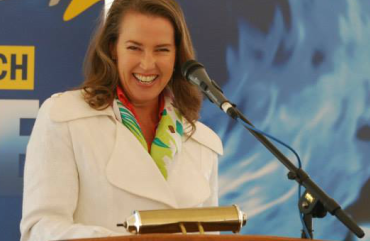
As a writer, speaker, teacher and Unity minister, my mission is to help heal separation consciousness to create a more beautiful world for all beings to thrive.
We are spiritual beings having a human experience. We can have agency over our thoughts and feelings and find beauty and “miracles” in very dark-seeming circumstances. I believe Nature, all of Creation, is sacred and I long to be part of a human species that is a restorative force on this planet. Evolving consciousness, rethinking systems and redesigning civilization is essential to making that a reality and so that is the focus of my ministry.
My books, programs, courses and speaking services support positive change in the areas of Personal Empowerment, Economic System Change, Restoration of the Living World, Redesigning Civilization, and Spirituality and Consciousness Evolution.
As a Unity minister I offer services and ceremonies including Celebration of Life, christening, weddings.
Programs
The ReThink — Consiousness Evolution, Economic System Change, and Creation

The ReThink ministry is grounded in the understanding that all Creation is sacred, and humanity only fully thrives when we are in healthy and respectful relationship with one another and all of life.
The ReThink focuses on:
- Redesigning economic systems and questioning assumptions that are currently undermining environmental health and social justice and equity.
- Rethinking how humans view and interact with nature, ecosystems, and animal species, particularly those we have commodified.
The ReThink works to accelerate momentum toward a new normal in human civilization, economies and ecological relationships. We are working to ensure that we don’t just “go back to normal,” but instead, seize this tumultuous, disruptive time to create new, healthier, saner norms. This is the time for Economic Evolution and Rethinking Relationships with one another and Nature. The ReThink is a 501c3 not-for-profit organization.
Click here for more information.
TRANSCEND — for people who want raised consciousness, economic system change, and a world that works better for all beings. TRANSCEND provides thought-provoking essays, spiritual concepts, and a bit of humor. You can have it delivered directly to your inbox.
Click here for more information.
A Course in Miracles
 A Course in Miracles defines a miracle as “a correction in error thinking.” I have found this to be profoundly, beautifully true. I offer numerous workshops and study groups based on the teachings in A Course in Miracles. These provide fun, deep, insights and tools for transforming our thinking and discovering peace and power as a result.
Click here for more information.
A Book for these Times
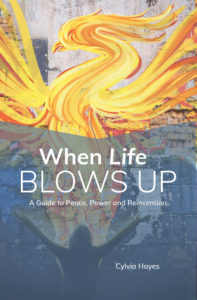
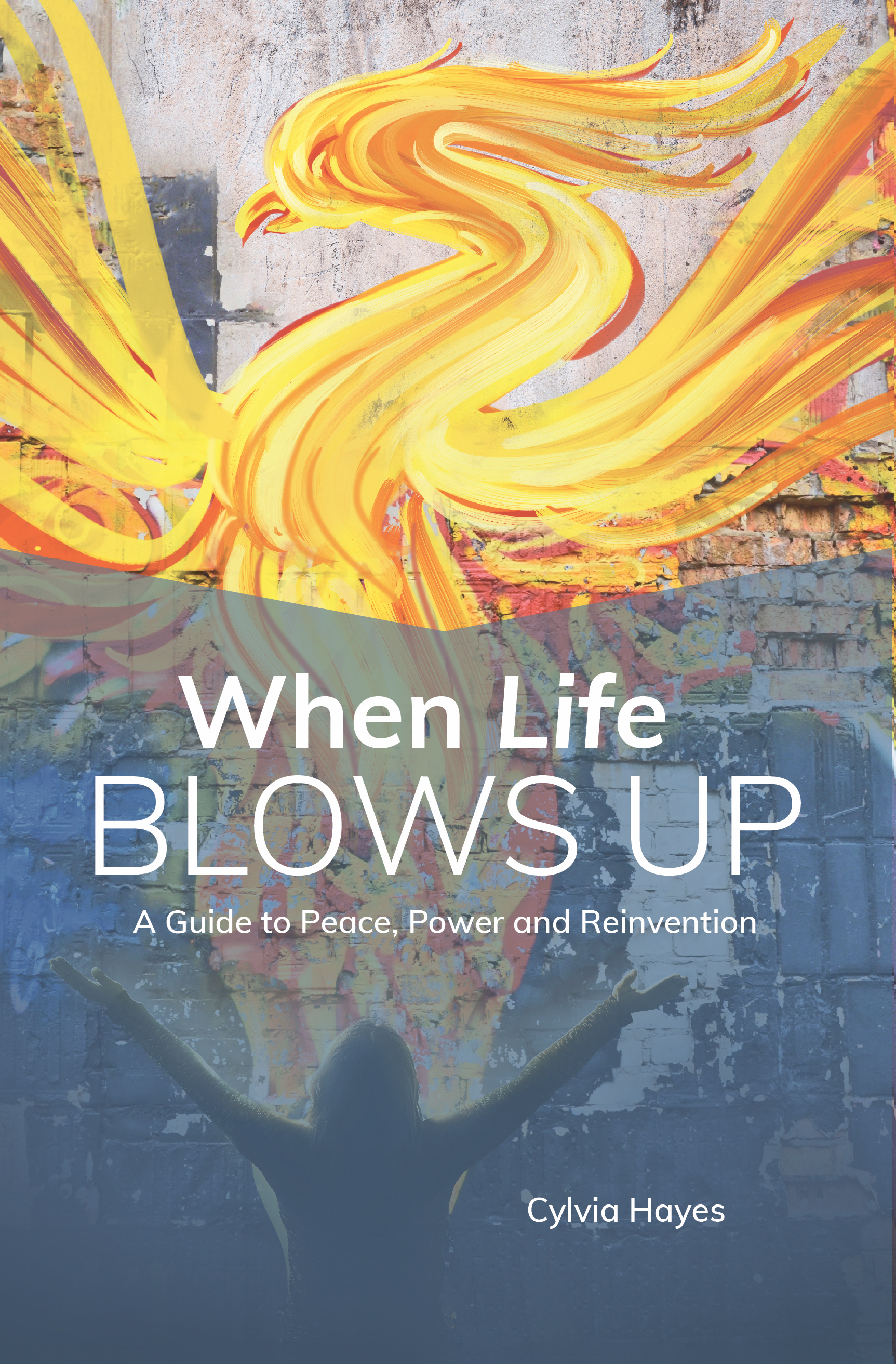
I never could have seen that my book, When Life Blows Up: A Guide to Peace, Power and Reinvention, would publish just weeks before we all got nailed with the pandemic and life as we knew it blew up. It has been an honor to hear from so many of you that this book has been helpful and comforting during these challenging times.
Here’s what people have been saying:
“Filled with forgiveness and love, and a story of rebirth and transformation that recognizes our deepest fears and hurt, and offers a path to healing.” –John de Graaf, co-author of AFFLUENZA and co-founder of the Happiness Alliance.
“When Life Blows Up: A Guide to Peace, Power and Reinvention is both a story of growth and reinvention as well as a guide to living authentically and vitally. Cylvia recounts some truly difficult circumstances, and is quick to take ownership with breathtaking humility and poise. Her story is inspirational and instructive. I highly recommend this to anyone enduring difficulty and hardship.” — John Nash, CFO.
When Life Blows Up takes the reader on an intimate journey through a devastating public shaming that destroyed my business, countless relationships and even my personal sense of identity. Through the annihilation of who I believed myself to be I discovered the True Self I hadn’t yet met and opened to new opportunities I hadn’t known existed. This book is for anyone experiencing loss, grief, and unexpected life upheaval. It offers proven strategies for:
- MANAGING FEAR EVEN IN CRISIS
- FINDING POWER IN SURRENDER
- HARNESSING FORGIVENESS
- RELEASING SHAME AND GUILT
- REENTERING CAREER and COMMUNITY WITH PEACE AND POWER
“This book can serve as an inspiration for anyone who feels that they can’t possibly get up after life has knocked them down.” — John Kitzhaber, former Oregon Governor
In order to be of service, when COVID-19 struck, I lowered the price of this book on all platforms.
Purchase the book on Amazon here.
Purchase on Barnes and Noble here.
Purchase on Thriftbooks here.









What people are saying …
Cylvia is a fantastic speaker — energetic, clear, inspirational and deep. She made such a difference at our event, raising everyone’s energy to a new level. — John D.
Cylvia is a a reliable source of information and discretion on numerous topics related to the environment and regenerative ecology/sociological strategies for a more sustainable and equitable future. — Lawrence Schechter, architect
Cylvia Hayes is such a powerful, inspiring speaker! — Rev. Jane Hiatt
Cylvia is a visionary and deep thinker and is able to express challenging topics in a way that activates hope, imagination, and action. — Lise G.
Books
SPEECHES, TALKS, INTERVIEWS